
The Promise vs The Reality
Chatbots are everywhere in 2026. Chatbots for small businesses are often marketed as smart AI assistants that reduce workload and improve customer support. But are they really worth the investment?
They promise:
🤖 24/7 customer support
⚡ Instant responses
📈 Better lead capture
🕒 Reduced manual workload
And yes — for some businesses, they deliver exactly that.
But the internet is equally loud with warnings:
“They get hacked.”
“They give terrible answers.”
“They’re expensive to maintain.”
“Just build a proper FAQ instead.”
So which side is right?
This article isn’t here to sell you a chatbot. It’s here to help you decide whether one makes business sense for your business.
What Do We Mean by “Chatbot” in 2026?
Not all chatbots are created equal.
1️⃣ Rule-Based Chatbots
These follow predefined flows. Examples: “Choose Pricing”, “Select Service”, “Book a Call”.
✔ Predictable
✔ Structured
✔ Lower-cost
✔ Easier to maintain
2️⃣ AI / LLM-Based Chatbots
These use AI models to understand natural language. They can:
🧠 Interpret flexible questions
📚 Pull from multiple content sources
💬 Respond conversationally
But they also require stronger guardrails, have ongoing running costs, and need structured training.
3️⃣ Hybrid Bots
Structured flows + AI fallback. For many small businesses, this is often the most practical middle ground.
Important truth: Most SMBs do not need enterprise-grade AI agents. They need clarity, speed, and reliability.
The Real Advantages of a Well-Designed Chatbot
When implemented thoughtfully, chatbots can be powerful.
🌙 24/7 Availability
If someone visits your site at 11:45 PM looking for pricing — they get an immediate response.
This matters for:
• E-commerce
• Coaching
• Professional services
• Businesses with global audiences
🔁 Handling Repetitive Queries
Most businesses receive the same questions daily:
• What are your charges?
• Do you offer X?
• How long does delivery take?
• Where are you located?
A chatbot can instantly answer these — freeing human time for higher-value tasks.
🎯 Structured Lead Qualification
Instead of a blank contact form, a chatbot can ask:
• What service are you looking for?
• What’s your budget range?
• When do you need this?
This improves lead quality before it reaches you.
💡 Makes Your Website Interactive
A gentle: “Can I help you find something?” can increase engagement — when used thoughtfully.
But the keyword here is thoughtfully.
The Risks Most Blogs Don’t Talk About
Chatbots are not “install and forget.” Let’s talk about the uncomfortable realities.
🔐 Security & Prompt Injection Risks
Poorly configured AI bots can be manipulated. Users may try to:
• Override instructions
• Extract hidden system prompts
• Trick the bot into revealing data
Without proper guardrails, this creates risk. A chatbot is not just a widget. It is a system.
❗ Poor Training = Poor Answers
A chatbot reflects your internal clarity. If:
• Your FAQs are outdated
• Your website is unclear
• Your documentation is weak
Then the bot will mirror that confusion.
👉 A bad chatbot damages trust faster than having no chatbot at all.
🔄 Ongoing Maintenance Is Required
Unlike a FAQ page, a chatbot needs:
📊 Log reviews
🔄 Knowledge updates
🧪 Scenario testing
🛠 Continuous refinement
Skipping this = decay.
😤 Customer Frustration Risk
Nothing frustrates users more than:
• Endless loops
• No human escalation
• Robotic non-answers
• “I’m sorry, I don’t understand” repeated endlessly
Skipping proper human handoff design is a false saving.
What Actually Determines the Cost of a Chatbot?
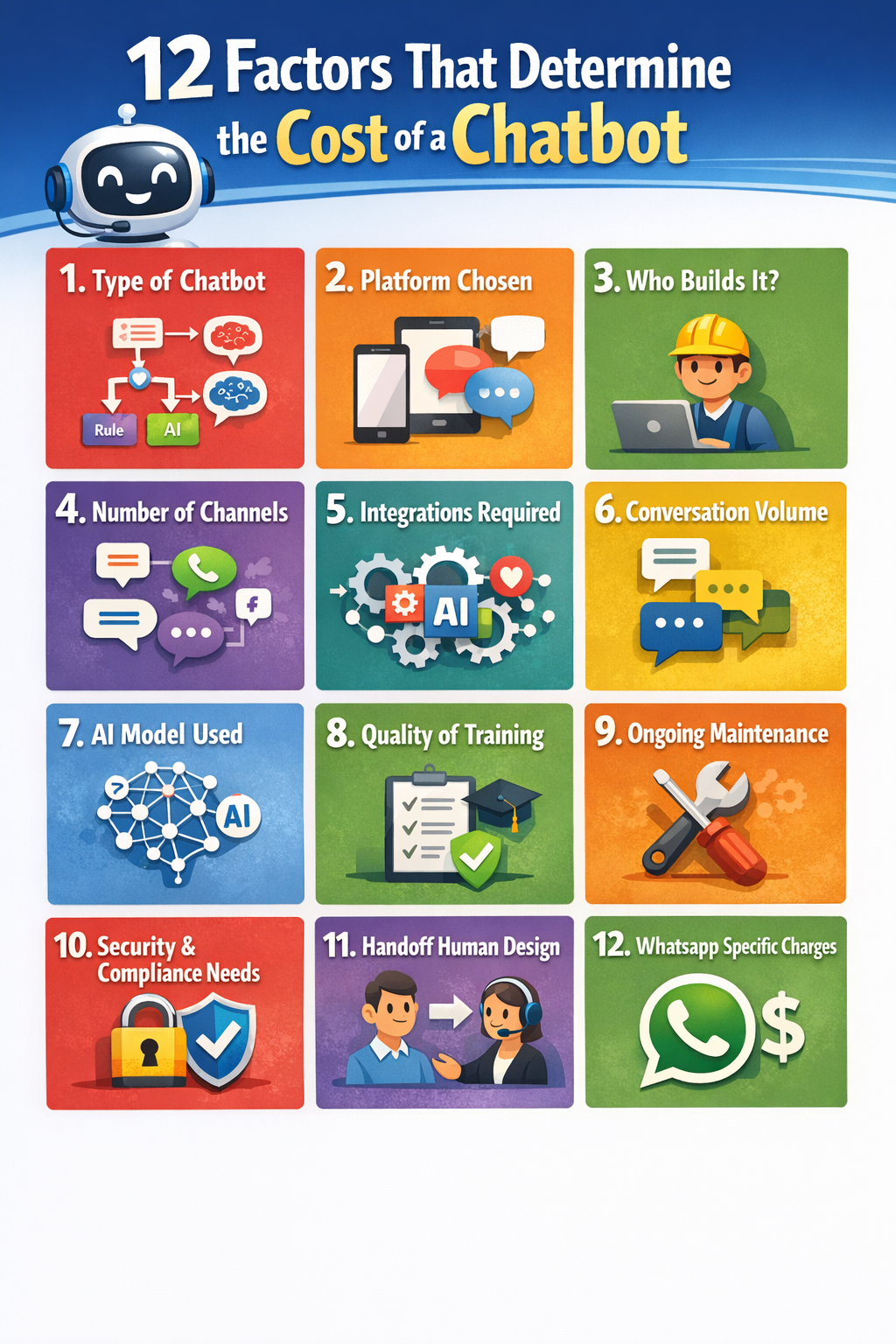
Instead of quoting numbers (which change), let’s examine what really drives cost. The real cost of chatbots for small businesses depends on more than just subscription fees.
🏗 Type of Chatbot
Rule-based → lower cost. AI-powered → higher setup + running cost. More intelligence = more complexity.
🧰 Platform Chosen
Off-the-shelf tools: Subscription-based, faster setup
Custom/API bots: Higher setup cost, greater flexibility
Your platform sets your baseline.
👩💻 Who Builds It
Freelancer, no-code consultant, or development agency — each differs in cost, depth, and long-term reliability.
The cheapest upfront option is rarely cheapest long-term.
🌐 Number of Channels
Website-only → simpler. Adding WhatsApp, Instagram, Messenger = integration complexity + additional platform charges.
🔗 Integrations Required
Connecting to CRM, calendar, payment gateway, inventory, or email automation — each integration increases setup effort.
📈 Conversation Volume
Many platforms charge based on messages per month, conversation count, or website traffic. Scaling traffic = scaling cost.
🧠 AI Model Used (For LLM Bots)
Every interaction processes text. Longer conversations → higher token usage. Premium models → higher cost. Complexity increases operating expenses.
📚 Quality of Training
Proper training includes mapping real customer queries, structuring knowledge base, and testing edge cases.
Cutting corners here is the #1 reason bots fail. Fixing a poorly trained chatbot later costs more than doing it right initially.
🔄 Ongoing Maintenance
Someone must review logs, refine answers, and update policies. This is either your time or a paid retainer — neither is free.
🛡 Security & Compliance Needs
If handling customer data, payments, or bookings, you need controlled access, escalation protocols, and periodic audits. Security adds cost — but skipping it adds risk.
🤝 Human Handoff Design
A smooth transition to WhatsApp, email, or live chat requires planning. Skipping this leads directly to frustration.
💬 WhatsApp-Specific Charges (India Context)
If you deploy automation on WhatsApp, Meta charges per template message — separate from platform fees.
For Indian SMEs where WhatsApp is primary, this is a commonly overlooked cost driver. WhatsApp automation should be evaluated independently from website chatbots.
When a Chatbot Makes Business Sense
A chatbot is worth exploring if:
📥 You receive frequent repetitive queries
🌍 You lose leads outside business hours
📊 Your services are structured
📑 You already have documented FAQs
🔄 You can maintain and review it
💰 Faster response improves revenue
In these scenarios, a chatbot can create real leverage.
When You Should NOT Add a Chatbot
Avoid adding one if:
🚦 Website traffic is low
🧩 Services are highly customized
🗂 Internal processes are undocumented
📝 Website messaging is unclear
⏳ You don’t have time for upkeep
In many cases, foundational improvements outperform automation.
Alternatives That Often Deliver Better ROI
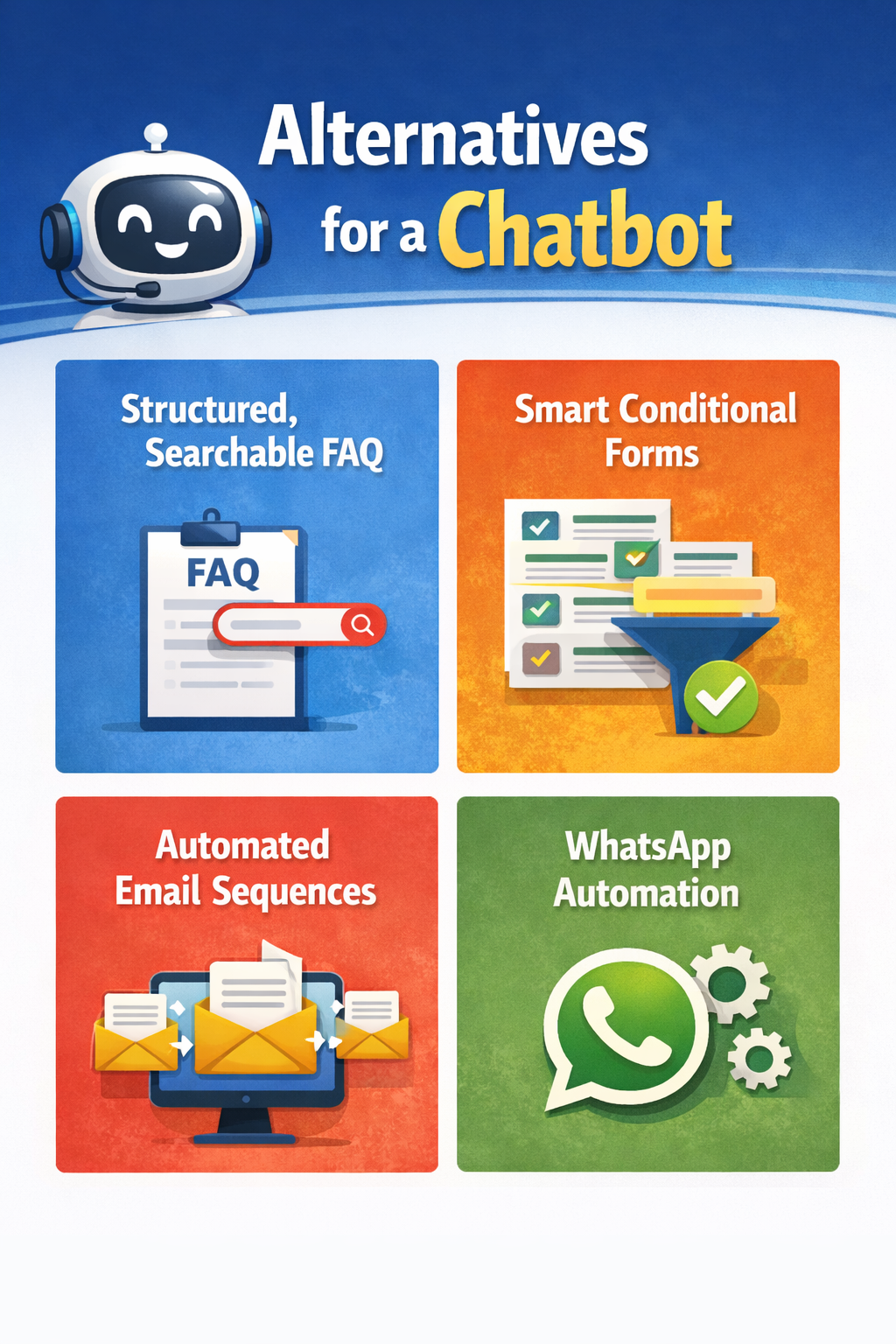
Sometimes simpler systems work better.
📖 Structured, Searchable FAQ
• Organized by user intent
• Regularly updated
• SEO-friendly
• Low maintenance
This is your foundation.
🧾 Smart Conditional Forms
Dynamic forms can ask relevant follow-up questions, route leads intelligently, and trigger automated workflows. Feels intelligent — lower complexity.
📧 Automated Email Sequences
Instant responses like:
• Thank you message
• Pricing brochure
• Calendar link
• Next steps
Creates professionalism without chatbot overhead.
💬 WhatsApp Automation
For many Indian SMEs: WhatsApp > Website Chatbot. But it must be evaluated carefully due to platform pricing structure.
A Simple Founder Decision Framework
Before installing a chatbot, ask:
1️⃣ Do I have enough traffic to justify it?
2️⃣ Are my FAQs already structured?
3️⃣ Can I maintain it consistently?
4️⃣ Will 24/7 response increase revenue?
5️⃣ Does the benefit outweigh long-term complexity?
If most answers are yes → explore further.
If not → strengthen foundations first.
The Practical Philosophy Behind It All
Chatbots are tools — not magic.
They can:
✅ Reduce manual work
✅ Improve responsiveness
✅ Create leverage
But they can also:
⚠️ Add complexity
⚠️ Increase maintenance load
⚠️ Create security risk
The goal is leverage — not trend-following.
Before adding automation, audit your workflows. Then decide.
👉 Not Sure If a Chatbot Is Right for Your Business?
Let’s assess your needs and design the right solution — whether it’s a smart chatbot, simpler automation, or a better-organized FAQ.
📩 Contact us: contact@anautomate.com